
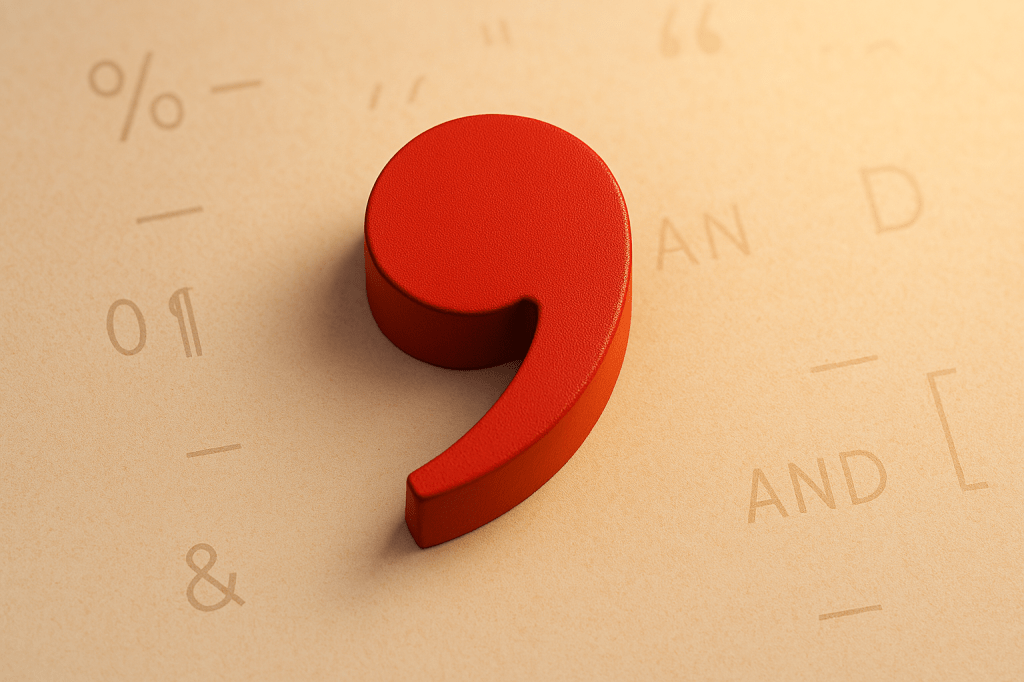
Let’s talk about one of the most debated topics in punctuation: the Oxford comma! The Oxford comma, also known as the serial comma, is the one you add right before the last “and” or “or” in a list of three or more. For example:
- I bought apples, oranges, and bananas.
That comma after “oranges”? That’s the Oxford comma doing its job. But why do people care so much about it?
Here’s where things get interesting: some people swear by it, while others think it’s unnecessary. The debate can get surprisingly fierce. Friendships have been tested, and internet comment sections have never been the same.
🤔 Why All the Fuss About the Oxford Comma?
At its core, the Oxford comma ensures clarity. To see why it’s important, consider what happens when we leave it out:
- I love my parents, Lady Gaga and Humpty Dumpty.
- I love my parents, Lady Gaga, and Humpty Dumpty.
See what happened there? Suddenly, your parents have some unusual celebrity identities. The Oxford comma helps make sure you’re not accidentally saying your parents are Lady Gaga and Humpty Dumpty.
⚖️ So… Should you use the Oxford Comma?
It depends on whom you ask. This question divides grammar enthusiasts everywhere.
- Academic, technical, and legal writers use the Oxford comma to avoid ambiguity.
- Style guides like The Oxford University Press and the Chicago Manual of Style are big fans, too. Their motto? “When in doubt, comma it out.”
Ultimately, clarity is the main reason to use the Oxford comma. If omitting it creates confusion, include it.
But are there times when it’s fine not to use the Oxford comma?
Let’s look at when breaking the rule is okay:
- Journalistic writing: Some style guides, like the Associated Press (AP), skip the Oxford comma unless leaving it out would cause confusion or ambiguity. In those cases, the Oxford comma is used to ensure the meaning is clear.
- Short, simple lists: In casual writing, if your list is short and the meaning stays clear without the Oxford comma, you can leave it out. Just make sure your sentence can’t be misread or misunderstood as a result.
📝 How to Actually Use the Oxford Comma
- Find a list of three or more things you want to mention: books, coffee, existential dread.
- Add a comma after each item except the last.
- Add the Oxford comma right before the “and” or “or” before your final item. That’s it!
Example:
- Correct: We visited Paris, London, and Rome.
- Without Oxford comma: We visited Paris, London and Rome.
📌 In Summary
The Oxford comma is loved by many, disliked by some, and always sparks debate. Whether you use it or not, remember that clarity matters most, and a little punctuation can help. When in doubt, use the Oxford comma for clarity.
I’d love to hear your thoughts!
 Writing Solutions
Leave a comment