It’s 2026, and AI writing tools are everywhere. From grammar checkers to full-blown content generators, the promise is always the same: faster, cheaper, and good enough. So if a business owner can run their website copy through an AI tool in seconds, why would they bother hiring a human proofreader?
It’s a fair question, and one I hear more and more. Here’s my honest answer.
AI is impressive. It’s also incomplete.
There’s no denying that AI has raised the bar for basic writing quality. Spelling mistakes and clunky grammar are easier to catch than ever. For a quick sense-check, AI tools are genuinely useful.
But proofreading has never really been about catching typos. At its heart, it’s about making sure your words do what you need them to do — clearly, consistently, and in a way that reflects well on you and your business.
That’s where AI falls short.
AI tools are trained on vast amounts of generic text. They’re very good at producing writing that sounds plausible. What they can’t do is understand your business, your clients, or the specific impression you want to make. They don’t know that you always refer to your service as “copy editing” rather than “copyediting.” They don’t know that your tone is warm and approachable, not corporate and stiff. And they certainly don’t know when a sentence is technically correct but completely wrong for your audience.
The errors AI misses
Here are some of the things a human proofreader catches that AI routinely overlooks:
Inconsistency across a document. You might refer to your product as “the programme” on page one and “the program” on page four. AI tools often miss this, especially across longer documents. A human reader notices it immediately.
Tone that’s slightly off. A sentence can be grammatically perfect and still feel wrong; too formal, too casual, or simply not you. Human proofreaders read for feel as well as correctness.
Factual errors and logical gaps. AI doesn’t fact-check. If you’ve written that your business was established in 2018 when it was actually 2016, or that a statistic applies to the UK when it’s actually from the US, a good proofreader will flag it.
Ambiguity. Sometimes a sentence can be read two ways. The writer usually can’t see it because they know what they meant. A fresh pair of human eyes catches the ambiguity before your reader does.
Context-specific errors. Legal disclaimers, technical terms, and industry jargon all require knowledge and judgement that AI simply doesn’t have.
Your reputation is in your words
For small businesses and sole traders especially, every piece of writing you put out is a reflection of your professionalism. Your website, your proposals, your emails, they all tell potential clients something about how you work.
A document full of inconsistencies or unclear phrasing doesn’t just look careless. It raises doubts. If the writing is muddled, clients may wonder whether the thinking behind it is muddled too.
Professional proofreading isn’t a luxury. It’s a form of quality control, and for many businesses, it’s one of the most cost-effective investments they can make.
Working with AI, not against it
I want to be clear: I’m not anti-AI. Many of my clients use AI tools as part of their writing process, and that’s absolutely fine. AI can be a helpful first draft, a brainstorming aid, or a quick sense-check.
But AI-assisted writing still needs a human eye before it goes out into the world. In fact, some of the trickiest proofreading work I do now involves AI-generated content, because it can sound confident and fluent while containing subtle errors, odd phrasing, or a tone that doesn’t quite match the brand.
The combination of AI efficiency and human judgement is a powerful one. But the human part still matters.
What good proofreading actually looks like
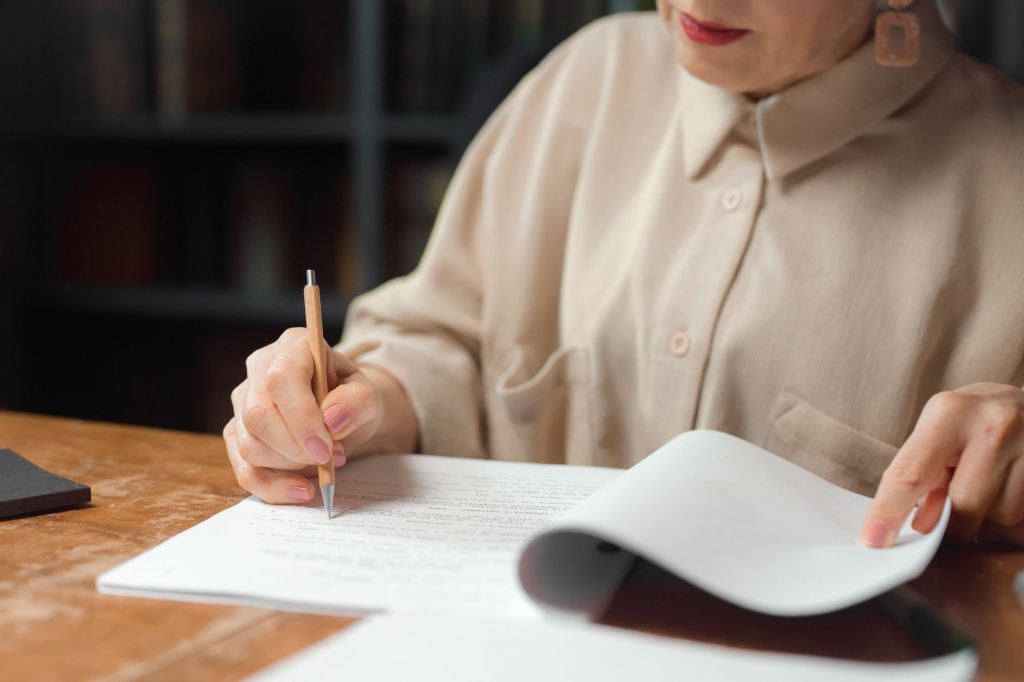
When I work with a client, I’m not just looking for typos. I’m reading their document as their audience would, and asking whether it’s clear, whether it flows, whether it says what they actually mean, and whether it sounds like them.
That kind of careful, considered reading takes time and expertise. It also takes a genuine understanding of language and communication, which can’t be automated, however impressive the technology becomes.
If you’ve been relying solely on AI tools to check your writing, it might be worth asking: is your content as clear and professional as it could be? And is it truly representing you at your best?
If you’d like a fresh pair of eyes on your website, reports, or any other written content, I’d love to help. Get in touch to find out more about my proofreading and copy editing services.


Leave a Reply